



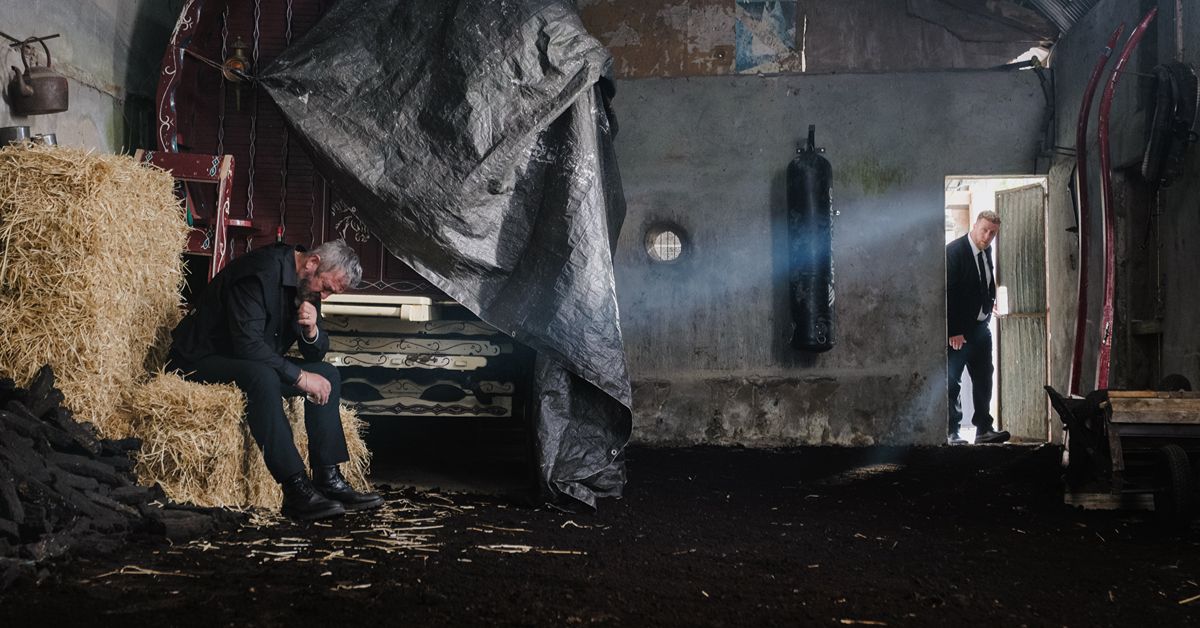
As the 2026 RTÉ/Ardán commissioned short film, The Dead House, from writer Martin Beanz Warde, director Aaron Chalke and producer Willie White, heads to Cork International Film Festival this month, the team celebrates the journey of bringing the story from stage to screen and securing a premiere at Ireland's oldest film festival. Find out more here...

A Story of Firsts Premieres at Ireland's Oldest Film Festival
The journey behind The Dead House began with a series of connections formed across the Irish arts scene. Willie White, former head of Dublin Theatre Festival, had previously mentored Martin Beanz Warde, supporting the early development and premiere of The Dead House as a theatre production. Director Aaron Chalke first met Warde while filming a commercial for the Arts Council, during which they filmed a scene from the play at the Mick Lally Theatre in Galway. Chalke and White subsequently became acquainted through the Advanced Producing course at TU Dublin, where discussions about adapting the play for screen began.
The collaboration brought together three creatives with different backgrounds but a shared interest in telling an important story. White recognised the value of presenting a Traveller narrative that moved beyond the familiar associations with violence and crime, while Chalke had been particularly struck by Warde's use of language when filming the promotional material in Galway. For Warde, telling a story rooted in his own experience as a Queer Traveller meant ensuring that it was presented authentically and with care.
This film represents several significant firsts; Although Warde is an established comedian, journalist, presenter and activist, The Dead House marks his first experience of screenwriting and acting. It is also a landmark for Irish cinema, as the first film in which a Traveller writer takes the lead acting role in a film exploring the lived experience of Gay Travellers.
For Chalke, the project followed a developing interest in filmmaking. With a background in advertising, he and his business partner at Foe began experimenting with short films in 2021, quickly discovering a passion for the format. Having primarily worked in producing, Chalke made his directorial debut in 2025 with The Death Notice of Eamonn McCarty, which has since become an Irish Oscar contender.
White's route into filmmaking has also been a gradual one. With a career primarily rooted in performing arts and television, he began exploring producing towards the end of his time at Dublin Theatre Festival, taking up a producer training opportunity. Although he entered the course with less industry experience than many of his classmates, his extensive theatre background and life experience brought valuable skills to the role.

The opportunity to bring The Dead House to the screen came through the RTÉ/Ardán Short Film Commission. White suggested the opportunity to Chalke, and with both already familiar with Warde and the potential of his playscript for screen adaptation, the team began preparing the script in anticipation of the next funding round. Chalke had previously been a finalist for the Commission and understood the application process.
Winning the Commission was important not only for the funding and mentorship it provided, but also as a significant confidence boost for Warde, reinforcing his belief in the story and its potential.
While the €18,000 award provided an important foundation, the team found that producing a quality short film within the available budget required careful planning and resourcefulness. The support offered by RTÉ and Ardán provided the opportunity to employ a crew, hire equipment, secure locations and bring the production to life. It also offered an important endorsement for all three filmmakers, giving them the confidence of having been trusted by established industry organisations and a completed project to present to future funders.
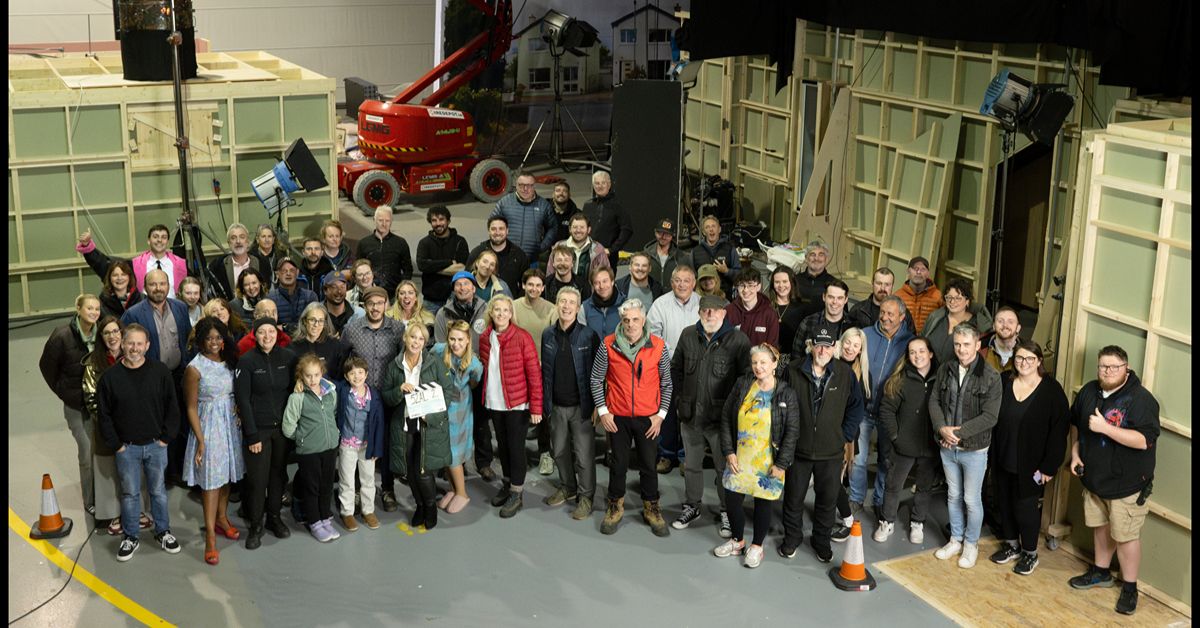
The production was originally intended to take place in the West, with Chalke from Mayo and Warde from Galway. However, the logistics of travelling between locations led the team to explore alternatives. White's connections in his native County Laois helped secure Michael Creagh's farmhouse in Rathdowney, where the film was shot over three days in June. The local community played an important role in making the production possible, offering practical support that helped keep costs down. Michael's neighbour supplied the coffin used in the film, while Abbeyleix Tidy Towns provided tables and chairs for catering. The production also benefited from the team's existing networks, with Chalke sourcing crew and equipment and Warde finding a Traveller wagon that became a key set piece. The level of local goodwill and practical assistance proved invaluable, allowing the team to make the most of the available budget. Such support also highlighted the advantages of filming outside Dublin, where community connections can make a significant difference to the resources available to an independent production.
From production to the festival circuit
Cork International Film Festival was an early ambition for the team as they considered the film's place on the festival circuit. Although they were initially uncertain whether they could meet the submission deadline, mentor producer Lara Hickey encouraged them to aim for Cork, advice that ultimately paid off.
Preparation and promotion were also important elements of the process. Warde led the promotional strategy, while Chalke prepared marketing materials in advance so the team could build on the momentum of the film's selection and announcement. Chalke also benefited from mentorship with Ross White and Tom Berkeley, the filmmakers behind The Irish Goodbye. Their guidance encouraged him to consider preparation well in advance of the shoot, helping him approach the production with greater confidence and flexibility when changes were required on the day.
Mentorship played a significant role throughout the project. Hickey provided support to White during production and into post-production, while Warde benefited from script edits and advice from mentor Mark O'Halloran and director Chalke. Moving the story from stage to screen required a different approach to storytelling, with the challenge of communicating the narrative through approximately 10 minutes of moving images rather than relying on the extended monologues possible in theatre. The process became an important learning experience in trusting the creative team and embracing the possibilities of a new format.
The support from Ardán extended beyond the financial award, with project coordinator Kenny Gaughan visiting the team in Laois during filming. The combination of funding, mentorship and practical encouragement had a significant impact on the production and helped the filmmakers navigate the challenges of bringing their first project of this kind to completion.
The experience also provided valuable lessons for the future. For White, completing the film was a considerable achievement, particularly as he continues to develop his producing experience. The production gave him a clearer understanding of what to expect on future shoots, including the importance of planning crew catering well in advance.
Casting was another important part of the process, particularly in finding the right actor to play Patrick's father. The film follows Patrick, who returns home for a funeral and is faced with a difficult conversation with his father. White took the initiative to contact Francis Magee's agent, and after reading the script, Magee immediately agreed to take part. His involvement provided a significant vote of confidence in the project, while his screen presence helped anchor the film.
With a limited budget allowing for very little rehearsal time between Warde and Magee, the actors had to place their trust in Chalke's direction and develop their father-son chemistry during filming. Working in this way ultimately helped build towards the film's emotional concluding scene.
Looking to the future
With The Dead House now heading to the festival circuit, all three filmmakers are already looking towards their next projects. Chalke is currently promoting both The Dead House and The Death Notice of Eamonn McCarty, with plans to explore longer-form projects as both a director and producer across film and television in the coming year. White has a feature film in development with Screen Ireland and has recently secured funding through the Laois Short Film Bursary for a new short film in 2027. With several stories from Laois that he hopes to bring to the screen, he is keen to see the county represented more frequently in Irish film and television.
For Warde, continuing to tell stories from his own perspective remains central to his creative ambitions. He is establishing his own production company, recognising the importance of creatives from the Traveller community having ownership of the stories they tell and the way those stories are represented. Having recently completed a Shadow Producer opportunity with the NTA Film & TV, Warde is also interested in exploring directing and developing his skills in that area. Another ambition is to establish the first Irish Traveller Film Festival, creating further opportunities for Traveller creatives and stories within the industry. His work is driven by a commitment to making space for marginalised voices and challenging both conscious and unconscious biases within the creative and film sectors. Rather than limiting opportunities to his own generation, Warde wants to help create an environment where the next generation of creatives can tell their own stories with confidence and ownership. As a Queer Traveller, his intention is to continue bringing his own experiences and perspective to the screen while helping others from underrepresented communities do the same.
The Dead House is therefore more than a successful adaptation from stage to screen. It represents an important milestone for its three filmmakers, a significant moment for Traveller representation in Irish cinema and an example of what can be achieved through collaboration, mentorship and community support.
The film will premiere at Cork International Film Festival this month. Book your tickets to see The Dead House at Cork International Film Festival HERE.
Published on Updated on